Few periods changed California as dramatically as the Gold Rush. After James W. Marshall discovered gold at Coloma in January 1848, news of the find drew people from across the United States and around the world. Mining camps appeared across the Sierra Nevada foothills, supply centers expanded, and communities that had been small settlements became busy towns almost overnight.
Many mining settlements eventually disappeared, but some survived. Today, travelers can walk through preserved business districts, visit mining sites, explore museums, and see landscapes that played important roles in Gold Rush history.
A trip through these California Gold Rush towns is about more than old buildings. Their stories include miners, merchants, immigrants, Native Californians, families, laborers, and entrepreneurs whose experiences reveal both the opportunities and profound consequences of the era. According to California State Parks’ Gold Rush overview, several important mining communities and sites are now protected within the state park system.
Coloma: Where the California Gold Rush Began
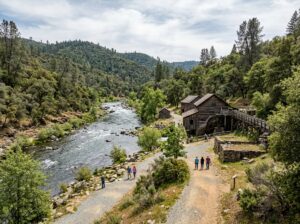
For travelers interested in Gold Rush history, Coloma is a natural starting point. James Marshall discovered gold there on January 24, 1848, while inspecting the tailrace of a sawmill he was constructing in partnership with John Sutter.
The discovery along the South Fork of the American River helped trigger the enormous migration that followed. By the spring of 1849, fortune seekers were arriving in California in huge numbers.
Marshall Gold Discovery State Historic Park
Much of Coloma’s history is interpreted at Marshall Gold Discovery State Historic Park. Visitors can see a replica of the sawmill, historic buildings, exhibits, and the landscape surrounding the American River. The park also contains the Marshall Monument overlooking the river canyon.
California State Parks notes that people came to the goldfields from places including Mexico, South America, Europe, Asia, and Australia. The Gold Rush also had devastating consequences for Native Californians, making their history an essential part of understanding the period rather than treating the era solely as an adventure story.
Travelers can review current hours, restrictions, exhibits, and visitor information through the official Marshall Gold Discovery State Historic Park website before making the trip.
Columbia: A Remarkably Preserved Mining Town
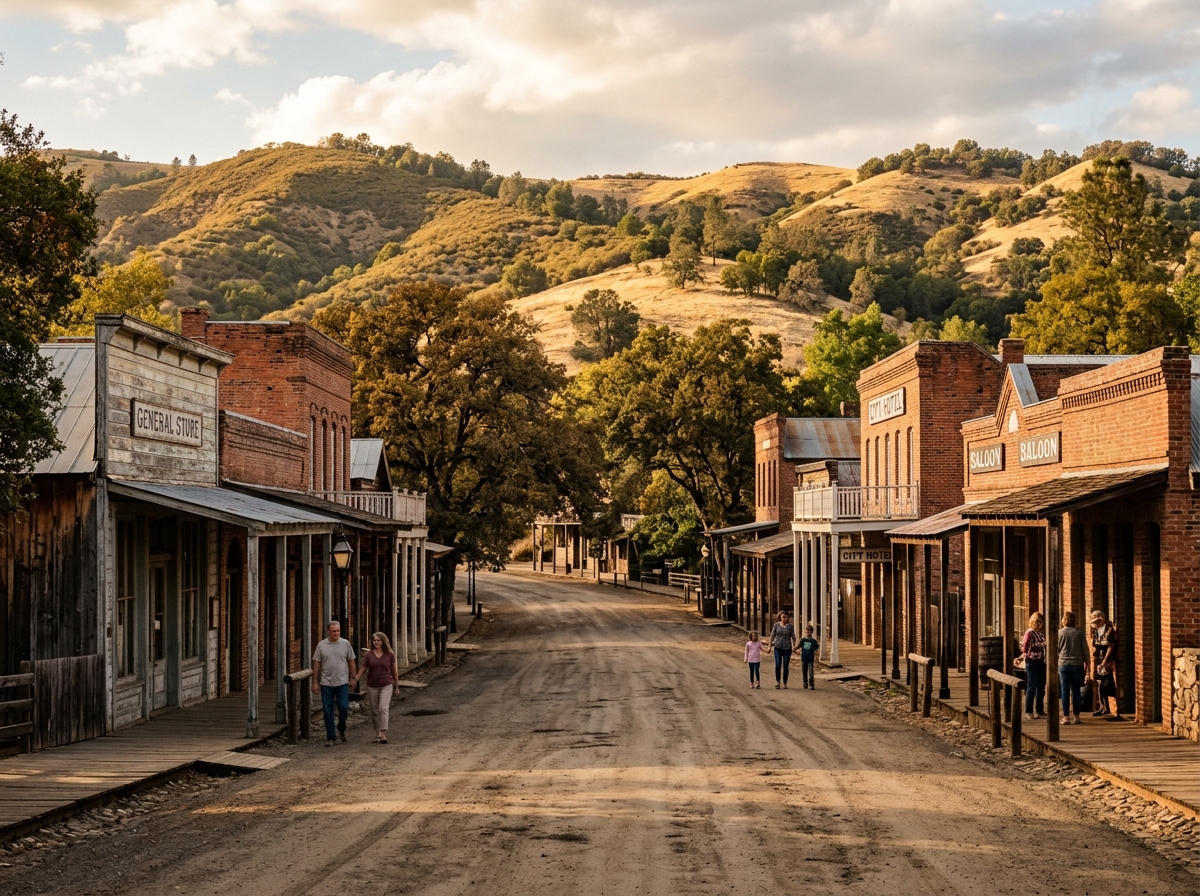
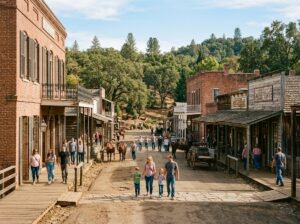
Columbia provides one of the most immersive opportunities to experience a surviving Gold Rush community. Gold was discovered in the area in March 1850, and a mining camp rapidly developed around the discovery.
The town became an important center in California’s Southern Mines. Unlike many settlements that vanished after their mining economies declined, Columbia endured. Its historic core was eventually protected as Columbia State Historic Park.
Walking Through the Historic District
Instead of viewing history entirely through museum cases, visitors can walk among preserved buildings and streets. California State Parks identifies Columbia as one of the best-preserved Gold Rush mining towns in the Sierra Nevada and notes that 39 historic buildings remain within its historic district.
Modern Columbia is not simply an abandoned collection of structures. It remains a community where park properties, businesses, and residents coexist. Depending on schedules and conditions, visitors may encounter interpretive activities and other experiences connected with the town’s history.
Check the official Columbia State Historic Park information before visiting, especially if you are interested in seasonal activities.
Grass Valley: California’s Hard-Rock Mining Heritage
Not every Gold Rush story centers on prospectors standing in rivers with pans. Grass Valley became closely associated with hard-rock mining, where miners pursued gold-bearing quartz underground.
One of the area’s most important historic destinations is Empire Mine State Historic Park. California State Parks records that gold-bearing quartz was discovered there in 1850. Mining continued at Empire Mine long after the earliest placer-mining frenzy had faded.
The area gives visitors an opportunity to consider how California mining evolved from relatively accessible surface deposits toward increasingly complex industrial operations.
If historic landscapes are a major part of your California itinerary, browse our Parks & Public Lands guides for additional ideas involving protected places across the state.
Nevada City: Gold Country Streets and Architecture
Nevada City developed during the Gold Rush and remains one of the Sierra foothills’ most recognizable historic communities. Its setting, older commercial buildings, narrow streets, and surrounding forested hills make it particularly appealing to travelers who enjoy exploring historic downtown areas on foot.
The attraction here is not one isolated mining exhibit. It is the broader sense of place created by the historic street pattern and architecture. Nevada City also works well as part of a larger Gold Country itinerary that includes nearby Grass Valley and other foothill communities.
Allow enough time to walk rather than simply driving through. Historic districts often reveal their character in smaller details, from building facades and side streets to the relationship between the town and the surrounding terrain.
Auburn: A Gateway to California Gold Country
Auburn’s Gold Rush connections date to 1849, when gold discoveries brought miners and mining activity to the area. Its location also makes it a practical stop for travelers heading between the Sacramento region and the Sierra Nevada.
Today, historic Auburn provides another perspective on how settlements created during the mining era developed into lasting California communities. The historic district can be combined with nearby outdoor destinations, making Auburn particularly useful for travelers who want history and recreation on the same trip.
California State Parks documents numerous Gold Rush-era mining locations around what is now Auburn State Recreation Area, reinforcing the area’s close relationship with the mining landscape.
Bodie: California’s Famous Mining Ghost Town
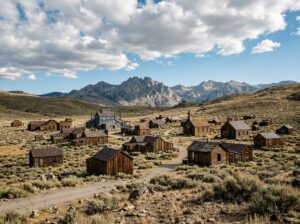
Bodie offers a striking contrast to communities such as Columbia and Nevada City. Located east of the Sierra Nevada, Bodie preserves the remains of a mining town in a remote high-desert landscape.
Gold was discovered in the Bodie area in 1859, although the town’s major boom came later. During its mining years, thousands of people lived and worked there. Homes, commercial structures, churches, mining-related buildings, and other surviving features now help visitors understand the scale of the former community.
A Town Preserved Rather Than Rebuilt
Bodie is particularly compelling because its weathered buildings sit within an open landscape rather than a modern commercial district. California State Parks identifies Bodie as a National Historic Landmark and an outstanding surviving example of a Western mining ghost town.
The site’s remote location is part of its appeal, but it also means visitors should plan carefully. Weather and road conditions can affect access, particularly outside the warmer months. Check current information from Bodie State Historic Park before setting out.
Shasta: A Northern California Gold Rush Story
The Gold Rush extended far beyond the better-known Mother Lode communities. Mining discoveries also transformed Northern California.
Historic Shasta developed into an important commercial center serving northern mining districts. California State Parks records that gold was discovered at nearby Reading’s Bar in 1848 and that the community, originally called Reading Springs, was established in 1849 before becoming known as Shasta.
Its surviving historic remains provide useful context for travelers who want to understand how merchants and supply centers supported mining communities. This broader perspective helps show that the Gold Rush economy depended on far more than miners themselves.
Planning a California Gold Rush Road Trip
California’s Gold Rush sites are spread across a large area, so travelers generally get more from the experience by concentrating on one region rather than attempting to see everything at once.
Coloma, Auburn, Grass Valley, Nevada City, and Columbia can form part of a Sierra foothills itinerary, while Bodie requires a substantial detour toward the Eastern Sierra. Historic Shasta provides an option for travelers exploring farther north.
Our California Road Trips section can help you connect historic destinations with other stops as the site expands its regional itineraries.
Before traveling, verify park hours, road conditions, seasonal closures, admission requirements, and accessibility information. Historic structures can also have different access limitations from modern attractions.
Seeing California History in the Places It Happened
Visiting California Gold Rush towns makes the state’s history tangible. In Coloma, travelers can stand beside the river where Marshall’s discovery transformed California. Columbia preserves the streetscape of a thriving mining community. Grass Valley illustrates the rise of hard-rock mining, while Bodie’s weathered buildings demonstrate how quickly a boomtown could decline.
These places also encourage a more complete understanding of the era. The Gold Rush generated enormous migration and economic change, but its effects were complicated and often devastating, particularly for Native Californians whose lands and communities were profoundly disrupted.
Approached thoughtfully, California’s surviving Gold Rush towns are more than nostalgic roadside stops. They are historic landscapes where visitors can examine the people, ambitions, conflicts, technologies, and consequences that helped shape the Golden State.