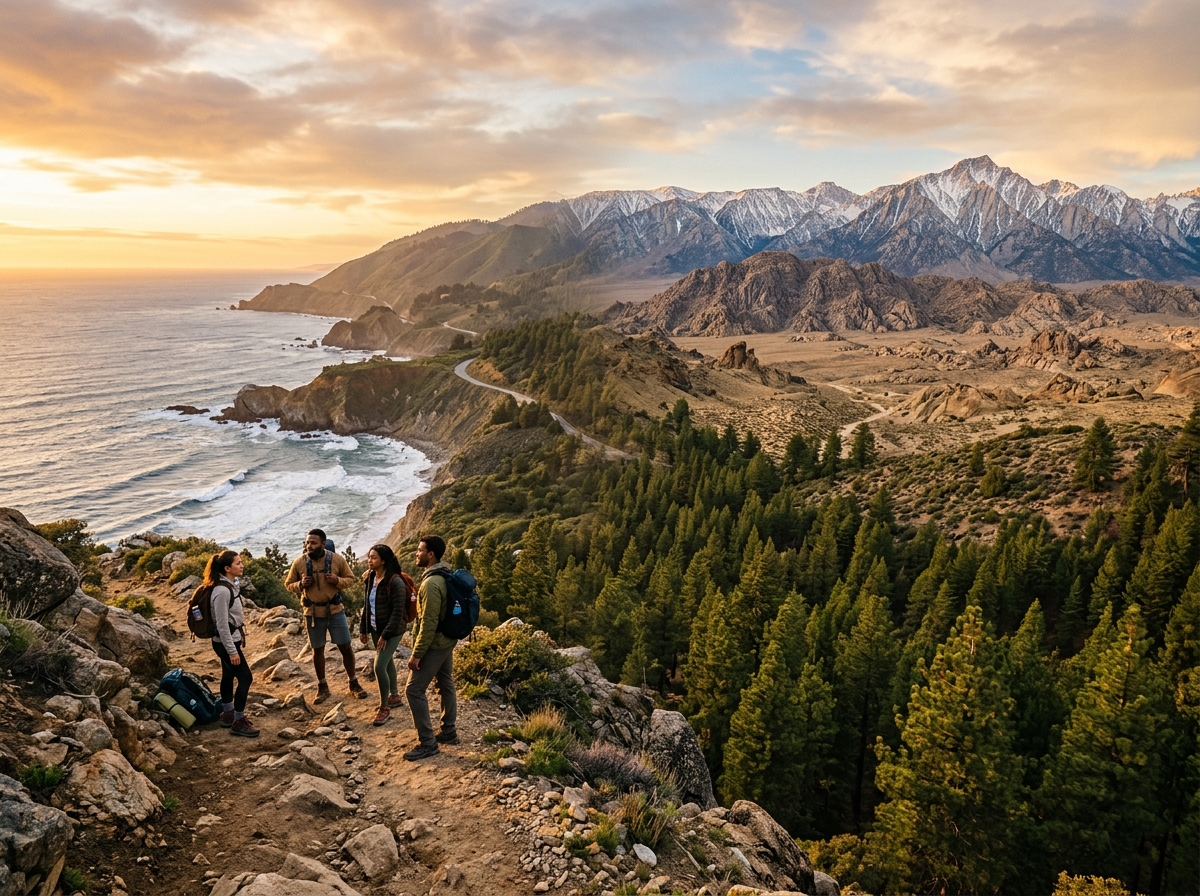
California’s size and geography make it one of the rare places where outdoor travel does not need to stop when the seasons change. Snow may cover the Sierra Nevada while desert trails are entering their most comfortable months. Spring can bring green hills and wildflowers to the coast, while summer opens high-elevation lakes, mountain trails, and long days for exploring.
That variety means there is almost always somewhere in California suited to hiking, paddling, cycling, wildlife viewing, camping, or simply spending a day outside. The key is matching the destination to the season instead of expecting every landscape to be ideal year-round.
These outdoor adventures in California offer a starting point for planning trips throughout the year, with options ranging from Pacific coastal trails to mountain snow and desert landscapes.
Spring Brings Green Hills and Coastal Trails
Spring is one of the most rewarding times to explore lower-elevation California landscapes. Winter rain can turn hillsides green, temperatures are often milder than summer, and wildflowers may appear where conditions are favorable.
Hike the Central and Northern California Coast
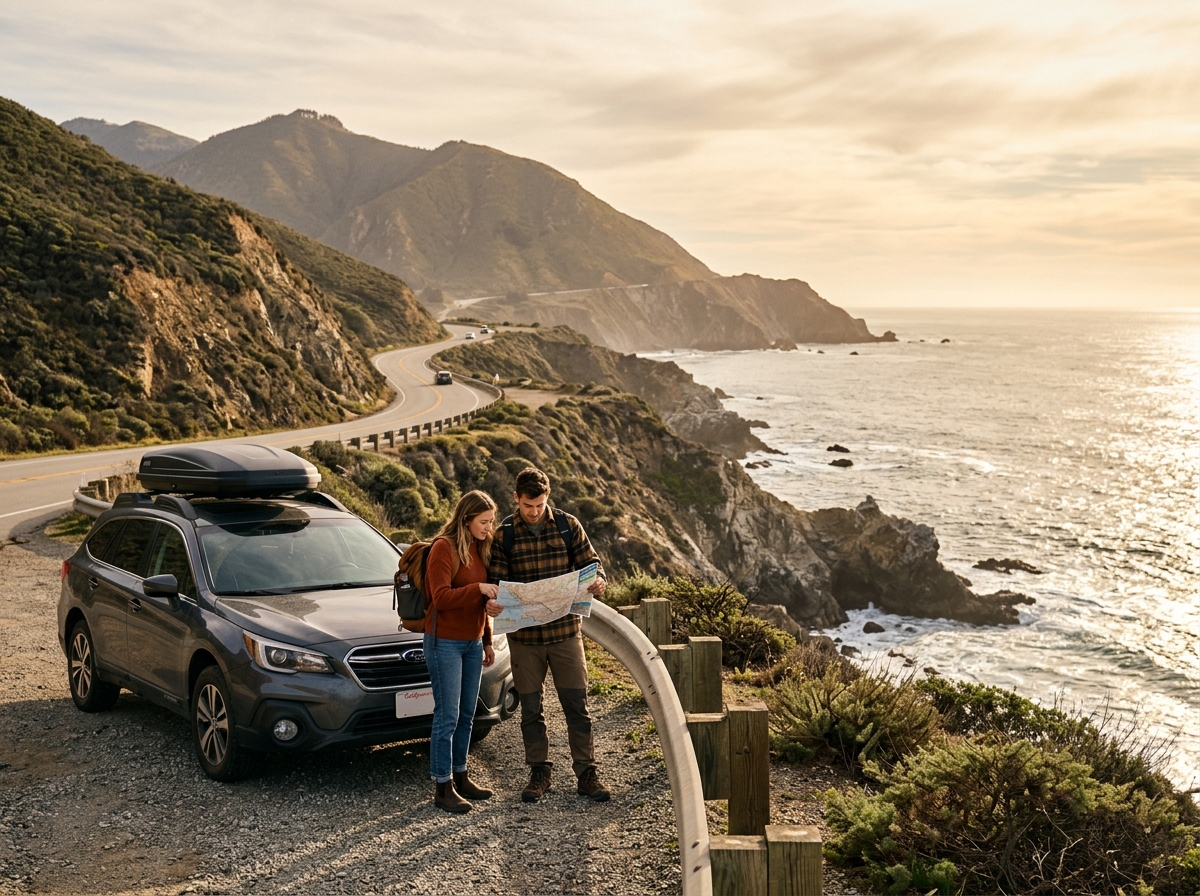
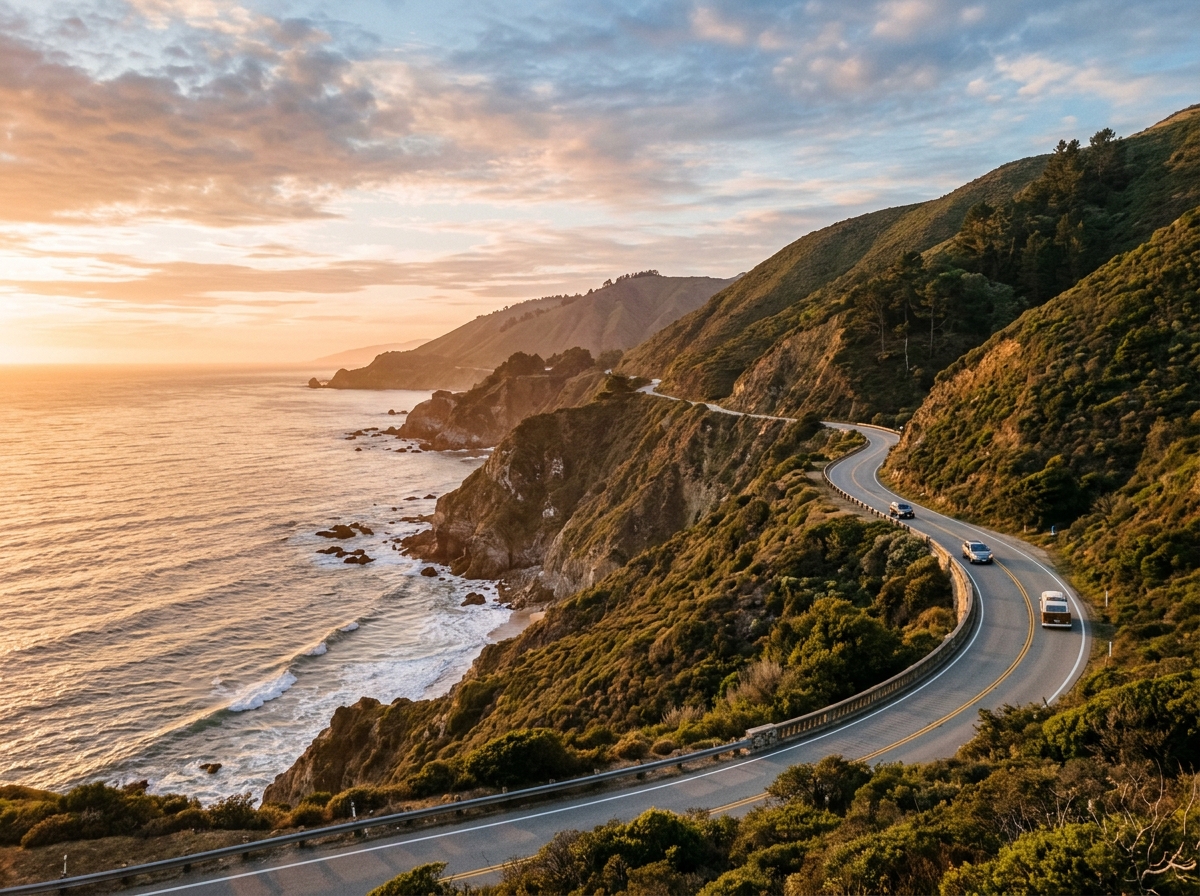
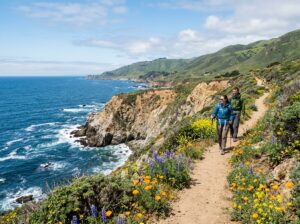
Coastal trails are especially appealing in spring because many routes combine ocean views with grasslands, cliffs, forests, and seasonal blooms. Areas around Point Reyes, the Monterey Peninsula, Big Sur, and Mendocino offer very different interpretations of the California coastline.
Conditions can vary significantly from one park to another. Rain can make trails muddy, while coastal fog and wind can change quickly. California State Parks recommends checking park conditions before leaving home because trails, roads, or portions of a park may be temporarily unavailable.
For current planning guidance, review the official California State Parks safety information.
Readers planning an ocean-focused trip can also explore our Beaches & Coast section for additional California coastal destinations.
Explore Foothill Trails Before Summer Heat
Spring can also be an excellent time for hiking in the Sierra Nevada foothills. Lower elevations around Gold Country often become hot later in the year, making mild spring days more comfortable for walking historic trails, river corridors, and oak woodland routes.
The season works particularly well for travelers who want to combine outdoor recreation with historic towns. A morning hike can be followed by an afternoon exploring one of California’s Gold Rush communities.
Summer Opens the High Country
Summer shifts the outdoor focus toward higher elevations. As snow melts and mountain roads reopen, the Sierra Nevada becomes one of California’s premier adventure regions.
Hike in the Sierra Nevada
High-country hiking is one of the classic California summer experiences. Trails around Yosemite, Sequoia and Kings Canyon, the Eastern Sierra, Lake Tahoe, and other mountain areas range from short lakeside walks to demanding backcountry routes.
Elevation changes everything. Even during summer, mountain weather can become cold or stormy, and snow can linger on higher trails well into the season.
The National Park Service advises visitors to check current conditions when planning outdoor activities because trail access, wildfire impacts, weather, and seasonal hazards can affect trips. Travelers exploring national parks can use the National Park Service California directory to find official information for individual park units.
Kayak Mountain Lakes
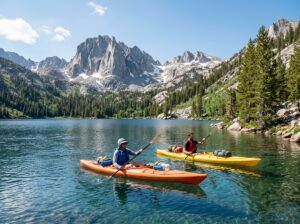
California’s mountain lakes provide a completely different summer adventure. Lake Tahoe is the best-known example, but paddling opportunities also exist throughout the Sierra Nevada.
Kayaking or paddleboarding can offer quieter access to coves and shoreline scenery that may be difficult to appreciate from busy roads. Early mornings are often attractive because winds can be lighter and the water calmer.
Water safety is essential. California State Parks advises visitors to understand local conditions and use appropriate flotation equipment when recreating on or around water.
Autumn Is Ideal for Hiking and Road Trips
Autumn can be one of the most comfortable seasons for outdoor travel in California. Crowds may decrease after the summer peak, temperatures begin to cool, and mountain forests and foothill communities can show seasonal color.
Walk the Eastern Sierra
The Eastern Sierra is especially striking in fall. Groves of aspen can turn yellow and gold against granite peaks, blue lakes, and high desert terrain.
Areas around Bishop, Mammoth Lakes, June Lake, and the surrounding mountains are popular starting points for scenic drives and hikes. Fall color timing varies by elevation and weather, so travelers should not assume that peak conditions will occur at the same time every year.
Because the Eastern Sierra involves long distances and major elevation changes, it is well suited to a road-trip itinerary. Our Road Trips collection can help connect outdoor destinations with scenic driving routes as more guides are added.
Cycle California’s Wine and Farm Regions
Autumn is also a good season for cycling through some of California’s agricultural landscapes. Routes through wine regions, coastal valleys, and smaller farming communities can combine recreation with local food and scenery.
Conditions vary greatly by road. Riders should research traffic levels, shoulders, bike lanes, weather, and local rules before choosing a route.
Winter Belongs to Snow and Desert Adventures
Winter creates two very different versions of outdoor California. In the mountains, snow transforms trails and forests. In the deserts, cooler daytime temperatures can make hiking far more comfortable than during summer.
Snowshoe Through the Sierra Nevada
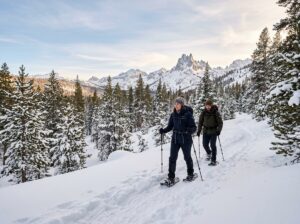
Snowshoeing is one of the most approachable ways to experience California’s winter mountains. Many mountain communities and recreation areas provide access to snowy forests, meadows, and designated winter routes.
The activity still requires preparation. Snow can hide trail markers, conditions can change rapidly, and daylight hours are shorter. Mountain visitors should check weather and road conditions before departure and understand whether chains or other winter equipment are required.
Hike California’s Deserts
While snow covers the Sierra, winter can be an excellent time for desert hiking. Death Valley, Joshua Tree, Anza-Borrego, and the Mojave region all offer landscapes dramatically different from the coast and mountains.
Even in winter, desert environments require careful preparation. Water sources may be absent, cell service can be unreliable, and temperatures can change quickly between daytime and night.
California State Parks advises desert visitors to download maps before traveling, understand road conditions, carry adequate food and water, and recognize that navigation apps can sometimes direct drivers onto roads unsuitable for ordinary vehicles. The agency’s desert safety guidance offers additional planning information.
Year-Round Adventures Beyond Hiking
California outdoor travel does not have to revolve entirely around hiking. Depending on location and season, visitors can also cycle, paddle, camp, watch wildlife, explore tide pools, ride horses, ski, snowshoe, surf, or simply walk along a beach.
Wildlife Viewing
California’s different ecosystems support an enormous range of wildlife. Coastal areas may provide opportunities to observe marine mammals and migrating birds, while mountain and forest habitats support species such as black bears and deer.
Wildlife should always be viewed from a safe distance. California State Parks specifically advises visitors not to approach or feed wild animals and to remain on established trails.
Camping Under California Skies
Camping can turn a day trip into a deeper outdoor experience, whether the setting is a redwood forest, desert basin, beach, mountain lake, or foothill park.
Popular campgrounds may require advance reservations, especially during peak seasons. Travelers interested in protected landscapes can browse our Parks & Public Lands section when planning future trips.
Plan Around Conditions, Not Just the Calendar
The idea of a “best season” is only a starting point. California’s conditions can change rapidly because of storms, snowpack, extreme heat, wildfire, flooding, ocean conditions, and seasonal closures.
A mountain trail that is accessible one summer may still hold snow the next. A desert hike that feels comfortable in January can become hazardous during a sudden warm spell. Coastal trails can close after landslides or storms.
Before traveling, check the official website for the park or recreation area you intend to visit. California State Parks recommends knowing conditions before departure, planning for permits when required, bringing appropriate gear, and having a backup plan if a destination becomes unavailable.
It is also wise to tell someone where you are going, stay on designated trails, carry adequate drinking water, and recognize that cell coverage can be limited or nonexistent in remote areas.
California Adventure Changes With the Seasons
The greatest advantage of outdoor travel in California is variety. Spring can mean green coastal hills and foothill trails. Summer brings high-country hiking and alpine lakes. Autumn offers cooler temperatures and mountain color, while winter opens snowy forests and desert landscapes.
Instead of waiting for one perfect travel season, visitors can follow California’s changing conditions throughout the year. Each season shifts the possibilities to a different part of the state.
That makes California less like one outdoor destination and more like many destinations connected by geography. Whether the goal is a quiet coastal walk, a mountain paddle, a desert hike, or a snowy trail, there is almost always another part of the Golden State ready to explore.