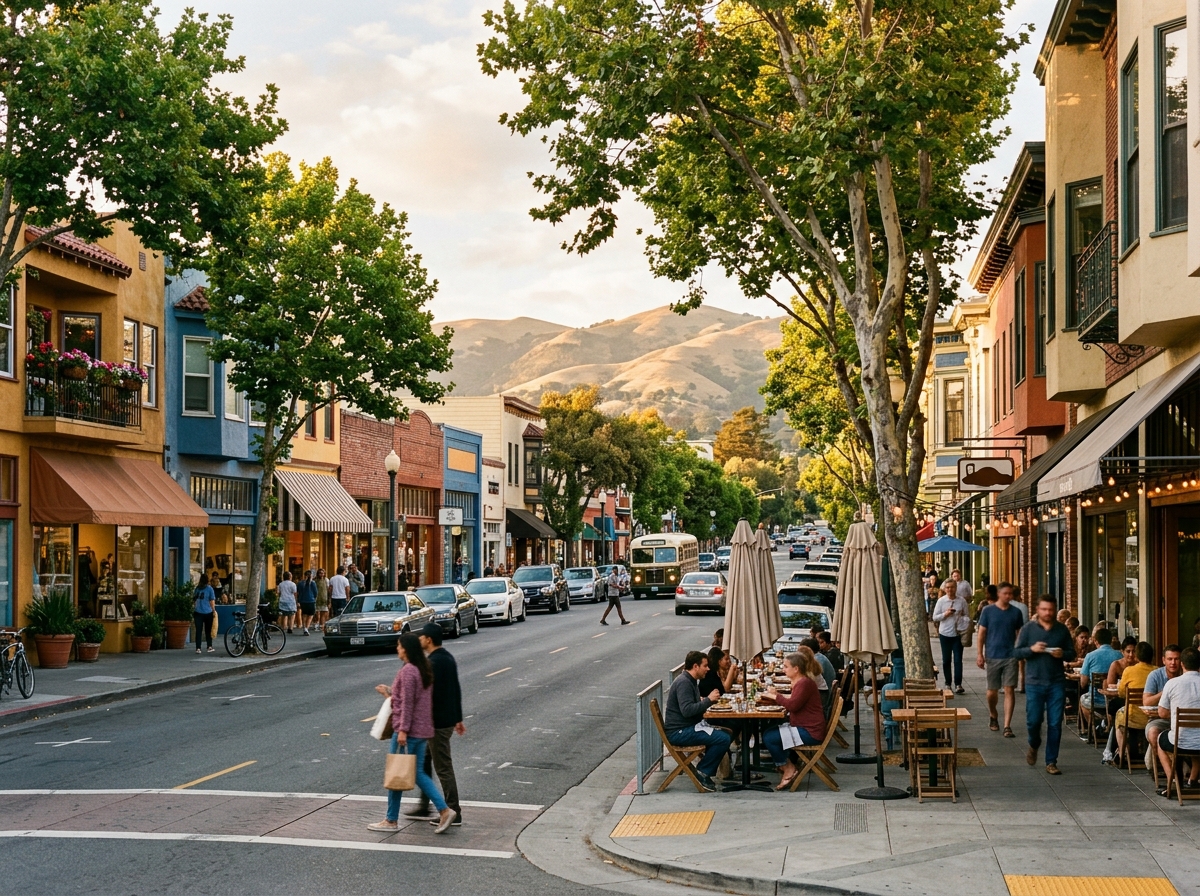
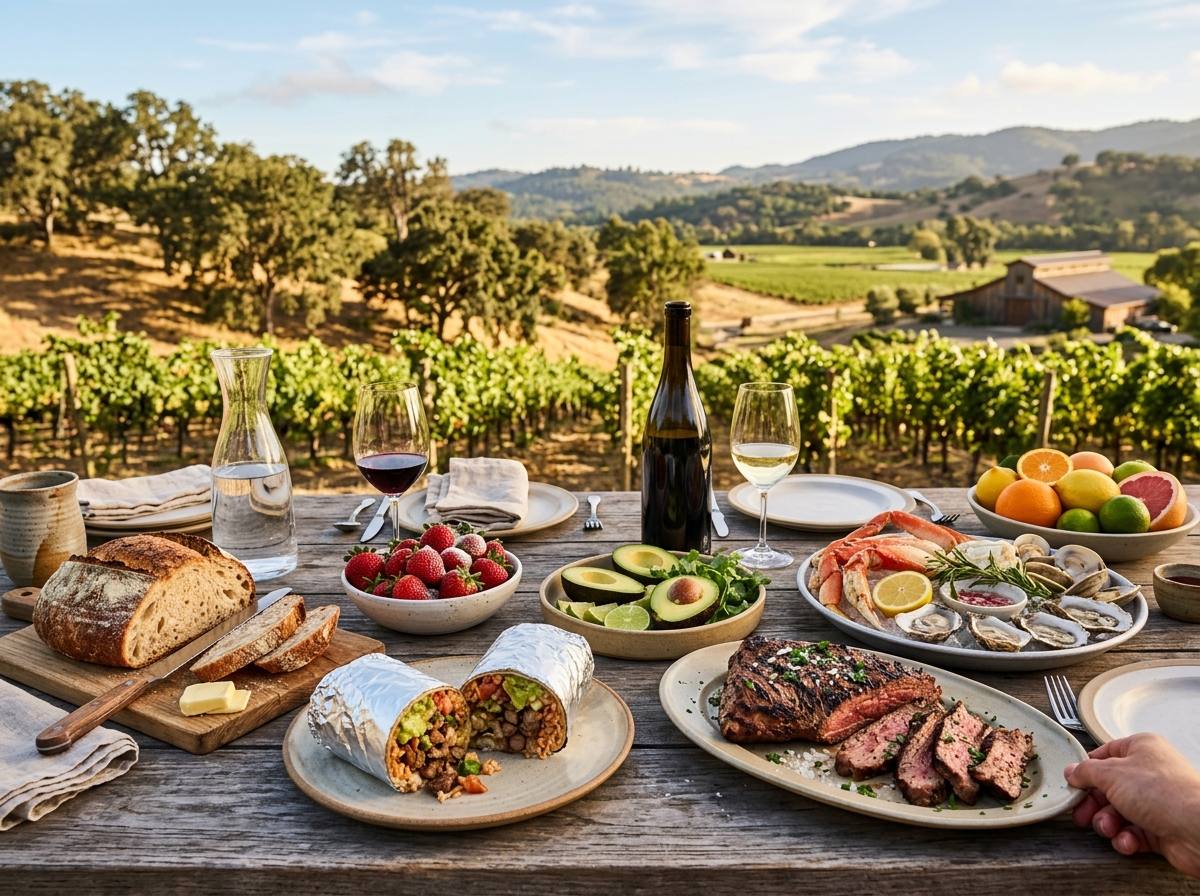
California food is difficult to define with a single dish. The state stretches from cool Pacific fishing communities to fertile inland valleys, desert cities, wine country, and some of the country’s largest metropolitan areas. Its cooking reflects generations of Indigenous, Mexican, Asian, European, Latin American, and other cultural influences, combined with an extraordinary range of agricultural products.
Some iconic California foods were created in particular neighborhoods. Others became closely associated with a region because of its agriculture, fishing industry, or local cooking traditions. Together, they provide a delicious way to understand the Golden State.
According to the California Department of Food and Agriculture, California produces more than 400 agricultural commodities. That enormous agricultural diversity helps explain why food plays such a large role in traveling around the state.
San Francisco Foods With Deep Local Roots
1. San Francisco Sourdough
Sourdough existed long before California, but San Francisco developed a particularly strong association with the bread during the Gold Rush era. European immigrants brought sourdough baking traditions with them, and its ability to remain usable for extended periods made it practical for miners and other residents.
San Francisco Travel identifies sourdough as one of the city’s signature foods and traces the history of Boudin Bakery to the late 1840s. Today, crusty loaves and sourdough bread bowls remain common sights around the waterfront and beyond.
You can read more about the bread’s local history through San Francisco Travel’s sourdough guide.
2. The Mission-Style Burrito
The oversized Mission-style burrito is inseparable from San Francisco’s Mission District. Its familiar format typically includes a flour tortilla wrapped around combinations of meat, rice, beans, salsa, and other fillings.
The dish grew out of the neighborhood’s Mexican and Mexican-American food culture and eventually became one of San Francisco’s best-known casual meals. San Francisco Travel specifically identifies Mission burritos as one of the city’s iconic foods.
Travelers who want to explore the neighborhood beyond its restaurants can also visit our Cities & Neighborhoods guides.
3. Cioppino
Cioppino is another food closely connected with San Francisco. The hearty seafood stew emerged from the city’s fishing community and reflects the strong Italian influence associated with neighborhoods around North Beach and the waterfront.
Recipes vary, but versions commonly combine seafood such as crab, clams, shrimp, mussels, or fish in a tomato-based broth. San Francisco Travel includes cioppino among the foods created or popularized in the city.
Southern California Foods With Famous Origins
4. The French Dip Sandwich
Los Angeles can claim one of America’s most recognizable hot sandwiches, although exactly who invented it remains disputed.
Both Philippe The Original and Cole’s, two longtime Downtown Los Angeles establishments that opened in 1908, have claimed a connection to the creation of the French Dip. Discover Los Angeles notes that the true origin has been lost to history, making it more accurate to recognize both restaurants rather than declaring a definitive inventor.
The basic idea remains wonderfully simple: sliced roasted meat on a French roll accompanied by flavorful meat juices. Learn more from the Discover Los Angeles sandwich guide.
5. California-Style Tacos
Tacos did not originate in California, but they have become fundamental to the state’s food culture. California’s long history with Mexico and generations of Mexican and Mexican-American communities have produced countless regional interpretations.
Southern California is especially known for street tacos, fish tacos, birria, carne asada, and contemporary versions combining ingredients from several culinary traditions.
Rather than representing one fixed recipe, the California taco demonstrates how food evolves when local ingredients and communities interact.
6. California Roll
The California roll became an important part of the American sushi story during the late 20th century. Several chefs and restaurants have been associated with its development, so its exact origin remains debated.
What made the roll influential was its approachable combination of ingredients, commonly including avocado, cucumber, and imitation or real crab. Avocado provided a creamy texture that helped create a style of sushi particularly appealing to diners unfamiliar with traditional raw-fish preparations.
Central Coast Traditions
7. Santa Maria-Style Barbecue
California has its own distinctive regional barbecue tradition in the Santa Maria Valley. The style dates to ranch gatherings in the Central Coast during the 19th century.
Today, Santa Maria-style barbecue is strongly associated with beef cooked over native red oak. Tri-tip has become one of the best-known cuts used for the meal, often accompanied by pinquito beans, salsa, salad, and grilled bread.
Visit California’s Santa Maria barbecue guide describes the tradition as a regional cuisine dating back to the mid-1800s.
8. Artichokes From the Central Coast
The cool, foggy Central Coast provides excellent growing conditions for artichokes. The vegetable has become particularly associated with communities around Monterey County and the Salinas Valley.
Travelers encounter artichokes grilled, steamed, fried, stuffed, and incorporated into soups, dips, and salads. Exploring agricultural areas can make familiar ingredients feel completely different because visitors see the landscape and communities responsible for producing them.
For more travel inspiration along this part of California, browse our Beaches & Coast section.
Foods Shaped by California Agriculture
9. Avocados
Few ingredients fit the modern image of California cooking better than the avocado. It appears on toast, tacos, salads, sandwiches, bowls, and countless restaurant menus.
Its importance also illustrates California’s larger agricultural influence. The state’s climate allows farmers to produce crops that have become everyday ingredients throughout the country.
10. California Almonds
Almond orchards are a familiar sight across parts of the Central Valley. Almonds are eaten raw and roasted but also appear as almond butter, almond flour, beverages, desserts, and ingredients in savory cooking.
The scale of production is significant. California Department of Food and Agriculture statistics ranked almonds among the state’s highest-value agricultural commodities for the 2024 crop year.
11. California Strawberries
Strawberries represent another highly visible part of California agriculture. Coastal growing regions benefit from moderate temperatures, helping supply berries over a long harvest season.
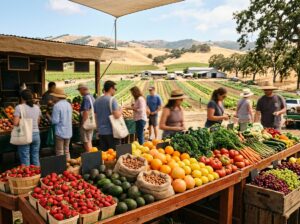
For travelers, strawberries appear everywhere from farmers markets and roadside stands to desserts, preserves, smoothies, and restaurant dishes. They also provide an easy connection between California’s agricultural landscapes and the food visitors encounter during a trip.
Seafood That Reflects the Pacific Coast
12. Dungeness Crab
Dungeness crab is one of Northern California’s most recognizable seafood traditions. It is especially associated with San Francisco, where crab dishes have long been part of the waterfront food scene.
The meat is sweet and delicate, so many preparations remain intentionally simple. Depending on the restaurant and season, diners may encounter cracked crab, crab cocktails, sandwiches, seafood stews, or dishes paired with sourdough.
San Francisco Travel includes Dungeness crab alongside sourdough and Mission burritos among the city’s signature foods in its official food and drink guide.
Why California Food Is So Diverse
California’s culinary identity is tied to both migration and geography. The Pacific brings seafood to coastal communities. The Central Valley produces an enormous variety of crops. Ranching traditions shaped parts of the Central Coast, while cities such as Los Angeles and San Francisco became gathering places for people and cuisines from around the world.
The result is not one uniform style of cooking. Visit California describes the state’s food culture as ranging from global cuisines to vegetable-forward and locally focused cooking often associated with the broader idea of California cuisine. Travelers can explore more culinary destinations through our Food & Drink collection.
Taste California Region by Region
The most rewarding way to experience iconic California foods is often to eat them close to the places that shaped their identity. Try sourdough or cioppino in San Francisco, explore the Mission District for burritos, sample Santa Maria-style barbecue on the Central Coast, or stop at a farmers market where produce comes directly from nearby growing regions.
Food can transform a road trip into a deeper exploration of California. A meal may reveal immigration history, agricultural traditions, regional geography, or a community’s relationship with the ocean and surrounding land.
These 12 foods are only a starting point. California’s size and cultural diversity mean that almost every region has something distinctive to taste, making local food one of the best reasons to keep exploring the Golden State.