California’s biggest cities often receive most of the attention, but some of the state’s most revealing stories survive in much smaller communities. Historic downtowns, mining-era buildings, mission plazas, Victorian homes, agricultural landscapes, and mountain streets can provide a more intimate look at how California developed.
Many California historic small towns were shaped by a specific chapter in the state’s past. Some grew during the Gold Rush, others became agricultural or transportation centers, and several evolved around Spanish and Mexican-era settlements. What makes them worth visiting today is that their history is still visible in the places where people live, shop, walk, and gather.
These communities are not frozen museum exhibits. They are living towns where preservation exists alongside modern businesses and daily life. Exploring them thoughtfully can add a deeper sense of place to a California road trip.
Ferndale and the Story of California Dairy Country
Ferndale, in Humboldt County, is one of Northern California’s most distinctive historic towns. Located near the redwood forests and the Lost Coast, it became prosperous through agriculture and dairy farming rather than mining alone.
The community began developing in the 1850s. According to Visit Ferndale’s local history, Seth and Stephen Shaw settled in the area in 1852, and the settlement eventually took its name from Seth Shaw’s home, Fern Dale.
Victorian Wealth Built in Wood
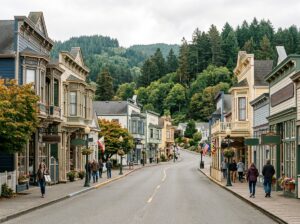
Ferndale’s successful dairy industry helped finance an extraordinary collection of ornate commercial buildings and residences. Some of the grander houses became known locally as “Butterfat Palaces,” reflecting the agricultural wealth behind their construction.
Main Street still displays Victorian-era architecture, while surrounding residential streets include Queen Anne, Italianate, Eastlake-Stick, and other historic styles. Visit California describes Ferndale as a preserved Victorian village where historic buildings remain part of an active community rather than a staged attraction.
San Juan Bautista at a Historic California Crossroads
San Juan Bautista tells a much older and more complex California story. The town developed around Mission San Juan Bautista, founded in 1797, but the landscape also reflects Indigenous history, Spanish colonization, Mexican California, and later American settlement.
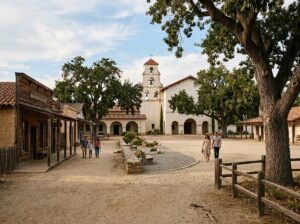
California State Parks describes San Juan Bautista as an important crossroads for travel between northern and southern California. Its historic plaza contains adobe and redwood buildings representing several eras of the state’s development.
A Plaza With Multiple Layers of History
The San Juan Bautista Plaza Historic District was designated a National Historic Landmark in 1970. The district includes the mission church, Plaza Hotel, Castro House, Plaza Hall, and Plaza Stables. Several of these buildings date from the 19th century and help visitors visualize the town’s role before and during California’s transition into the United States.
It is important to understand the mission era beyond its architecture. California State Parks notes that archaeological work with Tribal partners continues to expand knowledge of how Native people lived and worked around the mission. The Amah Mutsun people had deep ties to the area long before Spanish colonization.
Visitors interested in historic landscapes can also browse the site’s Parks & Public Lands section for additional California destinations connected with preserved history.
Julian and San Diego County’s Gold Rush
Julian sits in the mountains east of San Diego and feels very different from Southern California’s coastal cities. Its compact historic district, mountain setting, mining history, and long agricultural traditions make it a popular stop for travelers looking for a quieter side of the region.
Gold played an important role in Julian’s early development. According to Visit Julian, cattleman Fred Coleman found gold in a local creek in 1870, starting what became San Diego County’s first significant gold rush. The mining boom was much smaller than the earlier rush in the Sierra foothills, but it helped establish the town.
From Mining Town to Mountain Getaway
Many structures from Julian’s early decades still contribute to the downtown streetscape. The town later became strongly associated with orchards, particularly apples, giving it another identity beyond mining.
Today, visitors come for historic buildings, mountain scenery, seasonal color, local food, and access to nearby outdoor areas. Julian works especially well as part of a Southern California road trip because its elevation and landscape provide a dramatic contrast to the coast.
Nevada City and the Gold Rush That Never Fully Disappeared
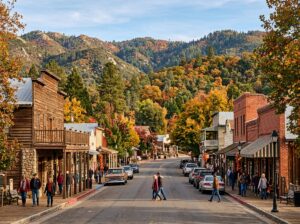
Nevada City is one of the strongest examples of a California mining town that survived long after its original boom. Gold brought thousands of residents to the Sierra foothills in the mid-19th century, but preservation helped the community retain much of its historic appearance.
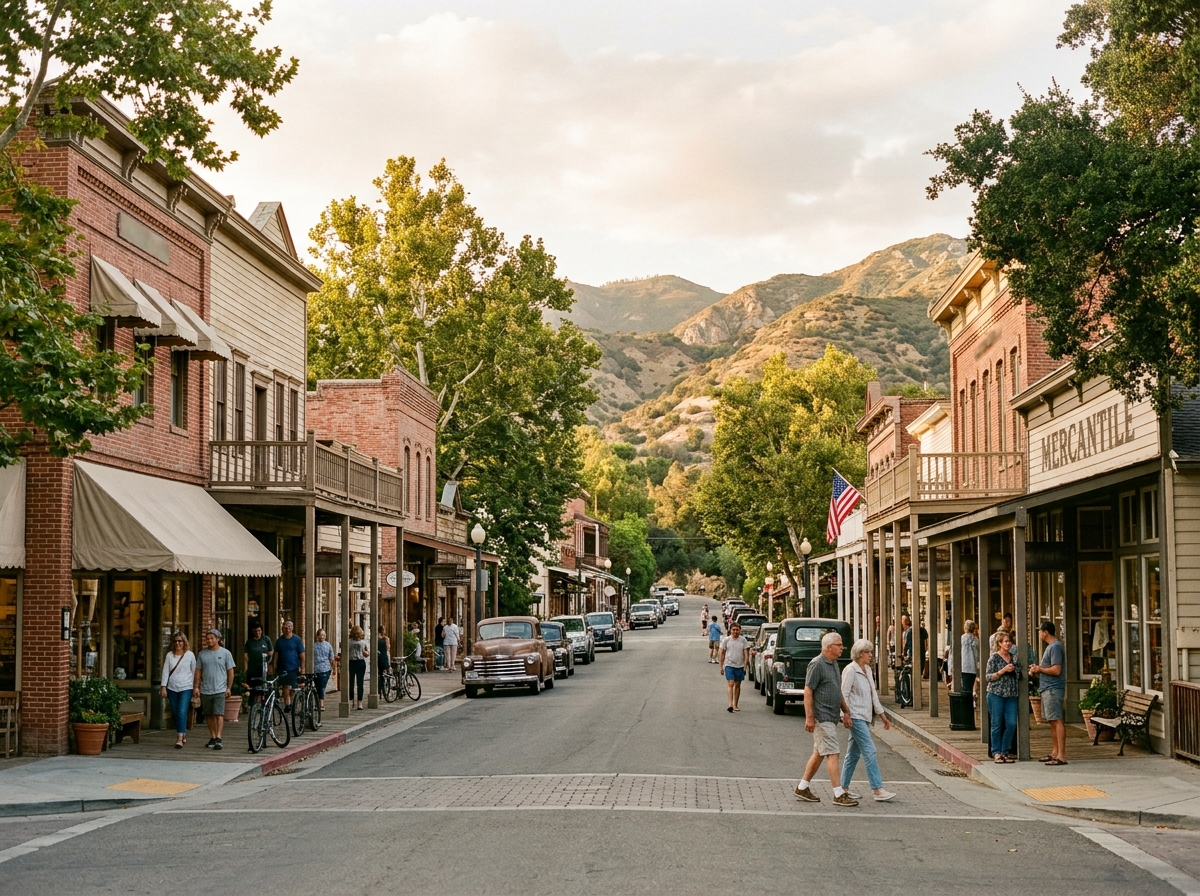
The Nevada City Chamber of Commerce describes the downtown as a historic district containing dozens of preserved buildings. The town’s narrow streets, brick commercial structures, churches, and surrounding pine-covered hills give visitors an immediate sense of its mining-era origins.
Nevada City also illustrates how historic towns can adapt rather than become static. Restaurants, galleries, shops, cultural organizations, and modern businesses now occupy a community whose physical structure still reflects the 19th century.
Sutter Creek and the Mother Lode Story
Sutter Creek lies in Amador County within the heart of California’s Mother Lode. Like Nevada City, it grew around the search for gold and the industries that supported mining communities.
The town’s preserved commercial streets and foothill setting make it particularly useful for travelers trying to understand how Gold Rush settlements evolved into permanent communities. Historic hotels, brick buildings, homes, and small businesses sit close together, creating a district that is easy to explore on foot.
Sutter Creek can also be combined with other communities along Highway 49, creating a route through some of California’s most historically significant mining country. Readers planning a longer drive can explore the site’s Road Trips category for related California itineraries.
Why Small Town History Feels Different
Large museums can explain history through objects and exhibits, but historic small towns allow travelers to see how geography and community development fit together. A river may explain why miners arrived. A fertile valley may reveal why dairying prospered. A plaza can show the organization of an early settlement, while a preserved commercial street illustrates where people once worked and traded.
The scale also encourages slower travel. Walking a few blocks in Ferndale or Nevada City can reveal architectural details that disappear when viewed from a car. In San Juan Bautista, the relationship between the plaza and surrounding buildings helps visitors understand how the community was organized. In Julian, the mountain landscape itself explains part of the town’s character.
For more places where architecture and local identity shape the travel experience, see our Cities & Neighborhoods guides.
Explore Historic Towns With Context
Historic destinations are most meaningful when travelers look beyond attractive buildings. California’s past includes migration, Indigenous displacement, colonialism, mining booms, agricultural development, immigration, environmental change, and economic transformation. Those stories often overlap within the same community.
Official state parks, local museums, historical societies, and destination organizations can provide useful context before a visit. Hours, exhibits, access rules, road conditions, and seasonal events may change, so current information should always be checked before traveling.
Supporting independent businesses and respecting residential areas also matters. These historic places are communities first, even when tourism is an important part of their local economy.
Discover California Through Its Smaller Communities
California’s historic small towns show that the state’s story extends far beyond Los Angeles, San Francisco, and its most famous attractions. Ferndale reflects the prosperity of Northern California dairy country. San Juan Bautista preserves layers of Indigenous, Spanish, Mexican, and American history. Julian tells the story of a Southern California mining boom, while Nevada City and Sutter Creek reveal the lasting influence of the Gold Rush.
Together, these towns offer something that major attractions cannot always provide: a chance to see history woven into ordinary streets and living communities.
Adding even one historic town to a California itinerary can turn a drive between major destinations into a richer journey through the people, landscapes, and events that helped shape the Golden State.