
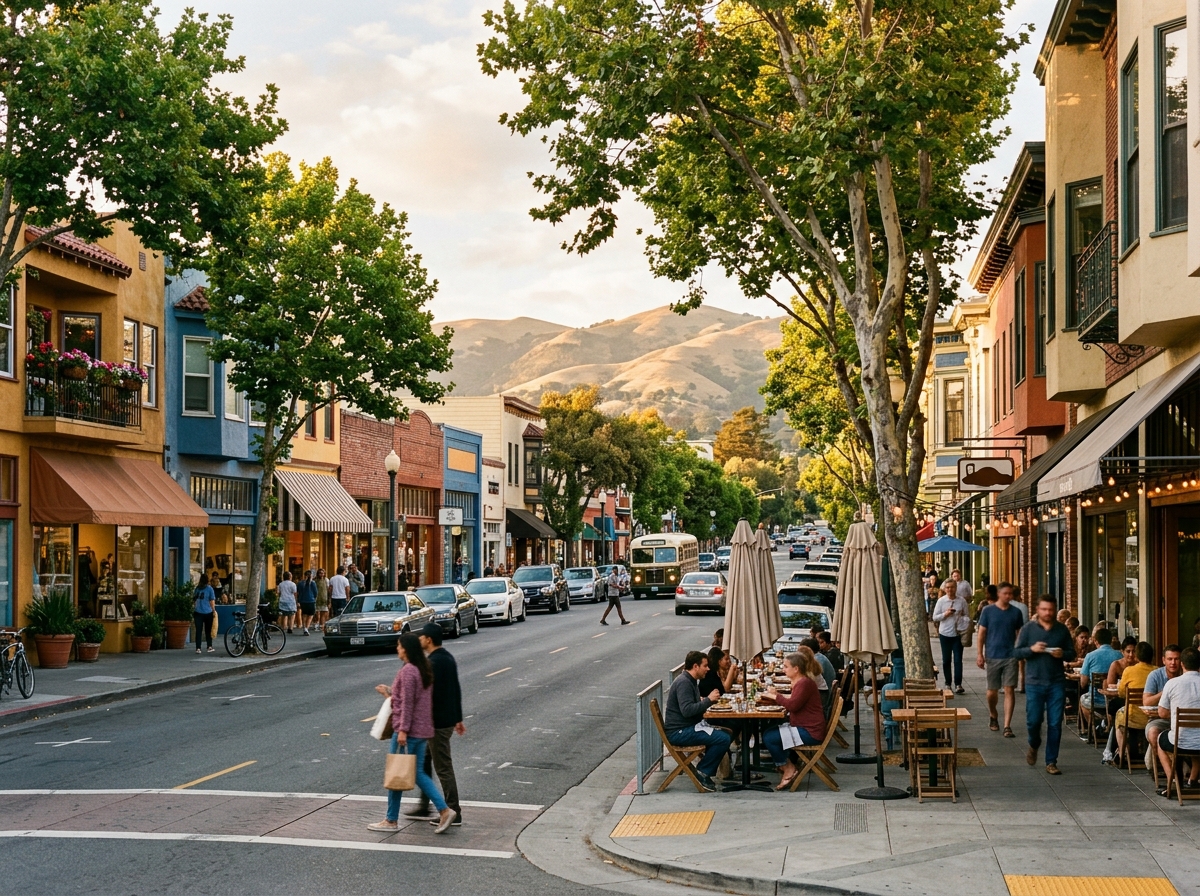
California’s best-known destinations can easily fill an itinerary, but some of the most memorable travel experiences happen on a much smaller scale. A few blocks of independent restaurants, century-old buildings, neighborhood parks, galleries, markets, and everyday street life can reveal more about a city than rushing between its most photographed landmarks.
For travelers interested in seeing another side of the Golden State, exploring individual neighborhoods is an excellent place to start. California’s cities contain communities shaped by immigration, architecture, art, food, industry, and generations of local history. Some are famous within their own cities but remain secondary stops for many visitors.
The following California neighborhoods are worth putting on your itinerary when you want to slow down, walk a little farther, and experience places with their own distinctive character.
1. North Beach, San Francisco
North Beach combines Italian-American heritage, literary history, cafes, restaurants, independent businesses, and classic San Francisco streets. The neighborhood stretches around Columbus Avenue and Washington Square, with Telegraph Hill rising nearby.
San Francisco Travel highlights North Beach’s long-standing Italian-American community as well as its connection to the Beat Generation. City Lights Booksellers and the surrounding streets helped make the area an important center of postwar literary culture. Visitors can also see historic architecture, browse small shops, or continue uphill toward Coit Tower.
For more official neighborhood information, see San Francisco Travel’s North Beach guide.
2. The Mission District, San Francisco
The Mission offers a completely different San Francisco experience. Murals, Latino culture, bakeries, taquerias, independent stores, Victorian architecture, and busy neighborhood streets all contribute to its identity.
Clarion Alley and Balmy Alley are especially associated with public art, while Mission Dolores provides a connection to the city’s earlier history. Dolores Park also offers an easy place to pause between exploring commercial streets such as Valencia and Mission.
If your trip includes California’s shoreline as well as its cities, explore more ideas in our Beaches & Coast guides.
3. Little Tokyo, Los Angeles
Little Tokyo is compact enough to explore on foot but carries exceptional cultural and historical significance. The neighborhood developed as an important Japanese-American community beginning in the late 19th century and remains a major cultural center today.
Visitors can explore Japanese restaurants, markets, cultural institutions, plazas, and historic streets within a relatively small section of Downtown Los Angeles. The Japanese American National Museum provides deeper context for the community’s history and the broader Japanese-American experience.
Discover Los Angeles provides an official walking guide to the neighborhood and notes that Little Tokyo is one of only three recognized Japantowns in the United States.
4. Arts District, Los Angeles
Just beyond some of Downtown Los Angeles’ traditional sightseeing stops, the Arts District mixes converted industrial buildings with galleries, restaurants, coffee shops, studios, and public art.
The neighborhood’s warehouse architecture gives it a noticeably different atmosphere from nearby civic and commercial districts. It is a good area for travelers who prefer exploring on foot, discovering independent businesses, and seeing how former industrial spaces have been adapted for contemporary city life.
Downtown Los Angeles Tourism describes the Arts District as part of a wider collection of culturally distinct downtown communities. Travelers can consult Discover Los Angeles’ Arts District information before visiting.
5. North Park, San Diego
North Park is one of San Diego’s strongest choices for visitors who want to get beyond the waterfront and major attractions. Located northeast of downtown and near Balboa Park, it has developed a reputation for restaurants, coffee shops, boutiques, arts venues, and craft beverage businesses.
University Avenue and 30th Street form the neighborhood’s busiest commercial core. From there, visitors can walk to restaurants, shops, galleries, and entertainment venues while seeing a more residential side of San Diego.
The San Diego Tourism Authority’s North Park guide describes the neighborhood as diverse and eclectic, with a strong mix of food, retail, arts, and live entertainment.
6. South Park, San Diego
Nearby South Park offers a quieter counterpart to North Park. Its walkable commercial pockets, older homes, cafes, restaurants, and independent shops make it well suited to a slow afternoon rather than a checklist-style sightseeing day.
Visitors can pair the two neighborhoods during the same outing, especially when exploring the areas east of Balboa Park. The appeal is less about a single landmark and more about the streets themselves, where local businesses and neighborhood architecture create the experience.
7. Midtown Sacramento
Sacramento is often associated with government buildings and Gold Rush history, but Midtown reveals a more residential and creative side of California’s capital.
The neighborhood has tree-lined streets, historic houses, restaurants, bars, galleries, coffee shops, and small businesses. It is also close enough to downtown attractions that visitors can easily combine both areas without spending much time in transit.
Visit Sacramento describes Midtown as a cultural hub with an eclectic mix of architecture and a high concentration of places to eat and explore.
8. Oak Park, Sacramento
Oak Park provides another look at Sacramento beyond its central government district. The neighborhood has deep local roots and has become known for community businesses, restaurants, public art, and gathering spaces.
It is a useful addition for visitors interested in how Sacramento’s older neighborhoods continue to evolve. Rather than rushing through, allow time to walk commercial streets, stop at local businesses, and appreciate the neighborhood at street level.
9. Temescal, Oakland
Temescal is a compact North Oakland neighborhood centered largely around Telegraph Avenue. It has become especially appealing to travelers interested in restaurants, independent retail, cafes, and an energetic neighborhood atmosphere.
One distinctive feature is Temescal Alley, where former stable spaces have been converted into small shops and businesses. The surrounding blocks offer a blend of older residential architecture and newer culinary and retail destinations.
Visit Oakland’s Temescal guide provides additional information about the neighborhood’s history, food scene, and transportation options.
10. Old Pasadena, Pasadena
Old Pasadena is much better known locally than it is among travelers who focus solely on central Los Angeles. Its historic commercial buildings, alleys, pedestrian-friendly blocks, restaurants, shops, and public spaces make it one of Southern California’s easiest districts to explore on foot.
The area includes 22 blocks within a National Register Historic District, according to Visit Pasadena. Restored late 19th- and early 20th-century buildings create a streetscape that feels noticeably different from many newer Southern California commercial areas.
11. Playhouse Village, Pasadena
A short distance from Old Pasadena, Playhouse Village adds theater, bookstores, restaurants, public art, and cultural institutions to a neighborhood-scale setting.
It is a good example of why travelers should sometimes move beyond a city’s single best-known district. Combining Old Pasadena, the Civic Center, and Playhouse Village creates a broader walking itinerary that mixes architecture, culture, dining, and local street life.
12. San Pedro, Los Angeles
San Pedro sits at the southern edge of Los Angeles and feels distinctly removed from the city’s inland entertainment districts. Its working waterfront history, arts community, maritime identity, and proximity to the Pacific give the neighborhood a character all its own.
The California Arts Council has recognized the San Pedro Waterfront Arts District as part of the state’s Cultural Districts program. Travelers interested in arts communities across California can also explore the Visit California guide to the state’s designated cultural districts.
How to Explore California Neighborhoods Responsibly
Neighborhood travel works best when the goal is exploration rather than simply collecting photographs. Walk where practical, use public transportation when it makes sense, support independent businesses, respect residential streets, and remember that these places are communities first and visitor destinations second.
Opening hours, transit conditions, parking rules, events, and access can change. Check official tourism websites and local transportation agencies before traveling. If your plans include parks or public landscapes outside California’s urban centers, our Parks & Public Lands guides can help you expand the trip beyond city neighborhoods.
Discover California One Neighborhood at a Time
California’s identity is not contained in a handful of landmarks. It lives in neighborhood restaurants, historic streets, cultural districts, murals, local parks, old storefronts, community institutions, and the everyday rhythm of its cities.
North Beach, Little Tokyo, North Park, Midtown Sacramento, Temescal, and the other neighborhoods on this list each provide a different perspective on the state. Building even one or two neighborhood walks into a California itinerary can make a familiar destination feel entirely new.